
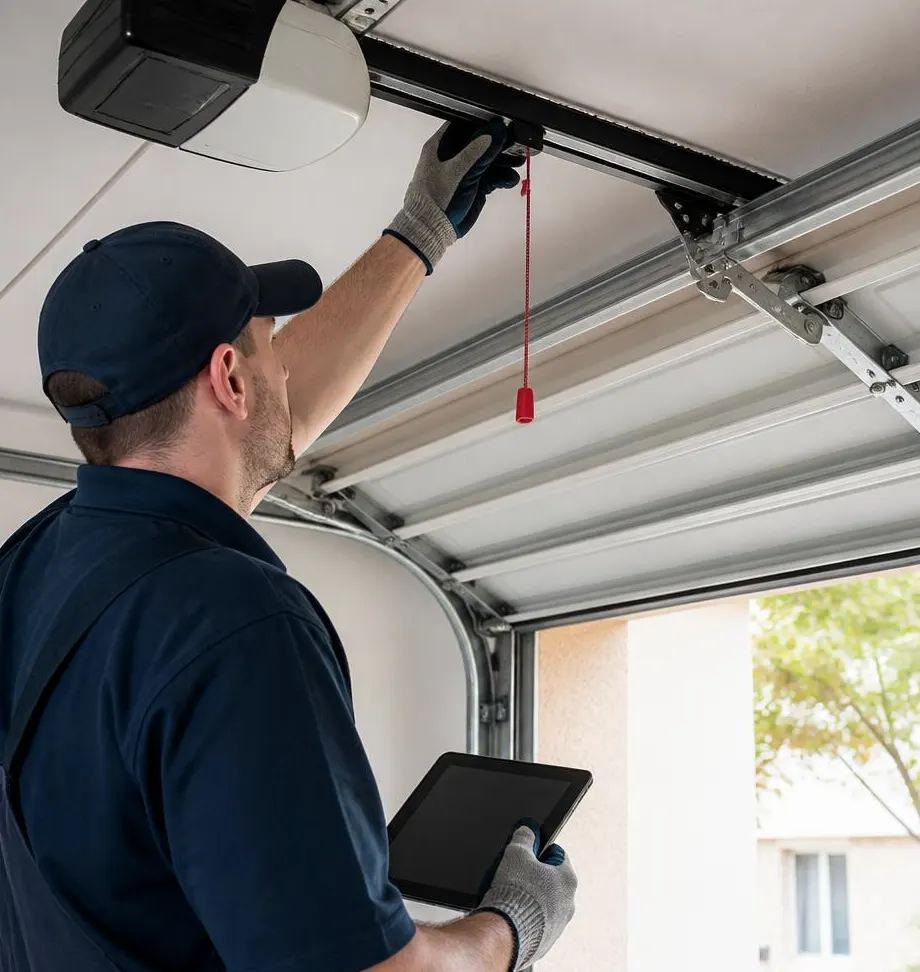
A technician gets this call a lot: someone's garage door opener has started grinding, chattering, or thumping hard enough that it rattles the laundry room wall or wakes the baby through the ceiling above the garage. Half the time the fix is simple—worn rollers, a loose chain, old lubricant gone gummy in the summer heat. But just as often, the homeowner asks a different question once the tech is standing there: should I just replace this with something quieter? That usually turns into a conversation about which opener type actually fits the house.
Chain Drive
A metal chain pulls the trolley along the rail, similar to a bicycle chain. It's the workhorse of the industry.
- Noise: The loudest option. Metal-on-metal contact transmits vibration into the rail and the house frame.
- Price: Lowest upfront cost, typically the most affordable option on the market.
- Lifespan: Very durable if maintained—chains handle heavy doors and daily use well.
- Trade-offs: Needs periodic lubrication, and dust from gravel drives or construction nearby can accelerate wear on the chain and rail.
Belt Drive
A rubber or polyurethane belt replaces the chain, with the same trolley mechanism.
- Noise: Quiet. No metal contact means far less vibration transfer—a real advantage if the garage sits under or beside a bedroom.
- Price: Mid-range, usually a step up from chain drive.
- Lifespan: Comparable to chain drive, though belts can degrade faster under extreme heat over many years.
- Trade-offs: Slightly higher cost for a meaningfully quieter ride, which matters more in attached-garage layouts than detached ones.
Screw Drive
A threaded steel rod moves the trolley directly, with fewer moving parts than chain or belt systems.
- Noise: Moderate—a steady hum rather than a clatter, though it varies by lubrication quality.
- Price: Comparable to chain drive, sometimes slightly more.
- Lifespan: Mechanically simple and reasonably durable, but performance is sensitive to temperature swings.
- Trade-offs: This is the one to watch locally. Long, hot summers can thin out lubricant and speed up wear on the screw mechanism, and in the parts of our service area that see occasional winter ice, cold can stiffen it the other direction. It wants more frequent lubrication checks than the other types.
Direct Drive
The motor itself travels along a stationary chain or belt track instead of pulling a trolley. Fewer parts move, so there's less to wear out.
- Noise: The quietest option by a clear margin—often the pick for homes with living space above or beside the garage.
- Price: Highest upfront investment of the four.
- Lifespan: Excellent. Fewer moving components generally means fewer failure points and less sensitivity to dust and grit.
- Trade-offs: The cost is the main barrier; the mechanism itself handles heat, dust, and storm-driven power fluctuations about as well as any opener on the market, especially when paired with battery backup.
What Fits a Typical Home Here
For most attached garages in the Austin area—especially where the garage shares a wall with a bedroom or living room—belt drive or direct drive is the better long-term call. The noise difference is noticeable daily, and both hold up fine through summer heat waves and the sudden hailstorms and wind gusts that roll through. For detached garages, workshops, or budget-driven replacements where noise isn't a concern, a chain drive is still a solid, affordable workhorse. Screw drives are a reasonable middle ground but need more consistent maintenance here than in milder climates, simply because of how much our temperatures swing between summer and the occasional winter freeze.
When to Call Austin Garage Door Pro
If your current opener is grinding, slipping, or struggling to lift the door—especially after a hot summer or a hard storm—that's worth a look before it fails completely. Our Garage Door Opener Repair & Installation service covers diagnosing the issue, repairing what can be saved, or installing a new chain, belt, screw, or direct-drive unit matched to your door's weight and your home's layout. We also offer Garage Door Maintenance visits that catch the lubrication and wear issues before they turn into a dead opener at the worst possible moment.
If your opener's acting up anywhere from Austin to Cedar Park, Round Rock, or Georgetown, give Austin Garage Door Pro a call—we'll get it sorted quickly and correctly.