
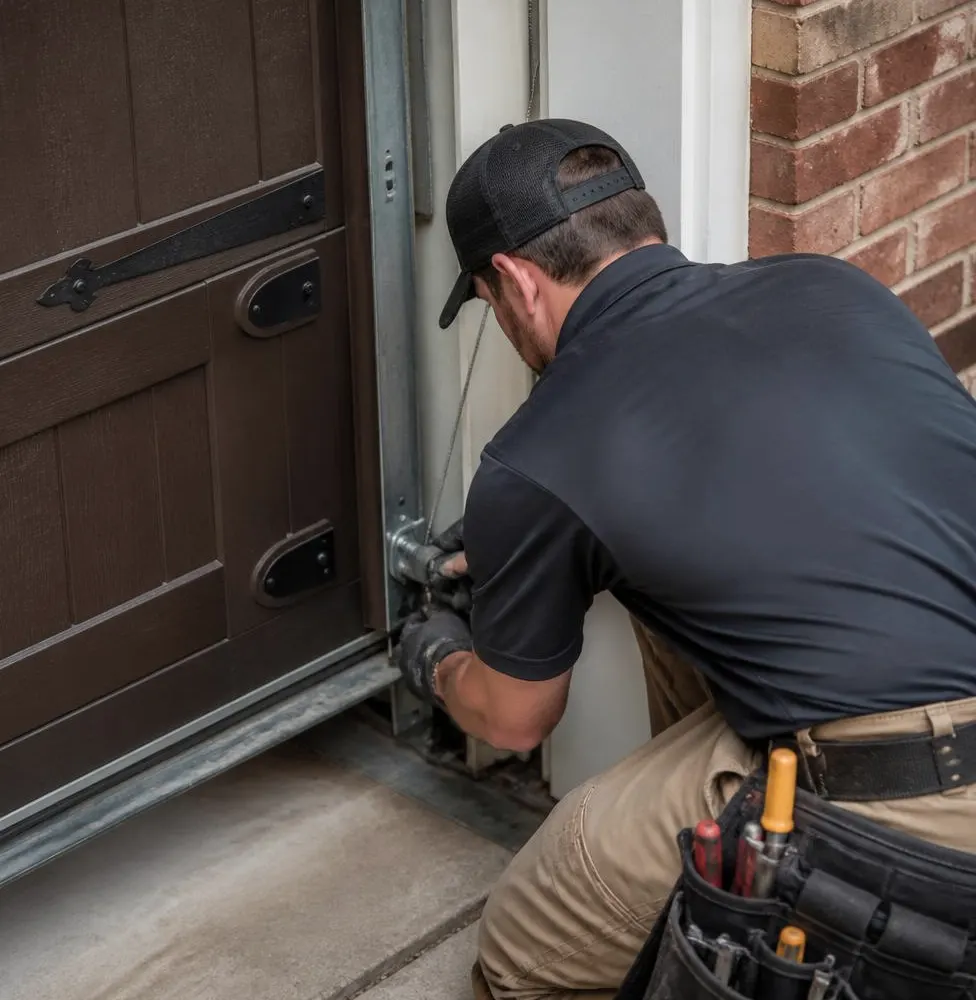
A well-built garage door lasts 15 to 30 years. The opener lasts 10 to 15 years. The springs last 7 to 12 years, or about 10,000 open-close cycles, whichever comes first. If you and your spouse are arguing about whether your 18-year-old door is "ancient" or "basically new," you're both a little right. Age matters less than how the door was used, maintained, and what Texas weather has thrown at it. Here's the rest of the story.
The Numbers, With Context
Those ranges assume average use, roughly four to six cycles a day. A detached garage used once a week ages differently than a daily-driver two-car garage with teenagers who can't remember to close it behind them. Springs are the easiest to pin down because they're rated in cycles, not years. A torsion spring rated for 10,000 cycles at six cycles a day lasts around 4.5 years. The same spring at two cycles a day can stretch past a decade. Everything else on the door is less precise but follows the same logic: more use and more exposure equals shorter life.
What Actually Wears These Things Out
Heat
Long, hot Austin-area summers do two things. First, they bake the lubricant out of hinges, rollers, and springs faster than cooler climates, which means more friction and more strain on the opener motor. Second, on doors with composite or wood-composite panels, repeated heat cycles can warp or delaminate material over the years, especially on south- and west-facing garages that take direct afternoon sun.
Storms, hail, and wind
Sudden severe storms are a fact of life here, and a direct hailstorm or a gust strong enough to flex the door can dent panels, bend tracks, or knock a door slightly out of alignment without anyone noticing right away. A door that's been through a few bad storms often shows uneven wear years before its time, even if it still looks fine from the driveway.
Dust and grit
Dust works into tracks, rollers, and the opener's chain or belt mechanism. Combined with old, dried-out lubricant, it turns into a mild grinding paste that accelerates wear on rollers and bearings. It's not dramatic, but it adds up over years.
Occasional ice
Ice is rare here, but when it happens, stiff, cold weatherstripping cracks more easily, and a door that's slightly out of balance has to work harder to move at all, which stresses the opener motor on cold mornings.
Cycle count
Every open and close is a withdrawal from the spring's and opener's lifespan. A second car, a home gym in the garage, or kids in and out all day will burn through that lifespan faster than the manufacturer's estimate assumes.
What Shortens the Life You've Got
- Skipping lubrication. Dry hinges and rollers force the opener motor to work harder on every cycle, straining gears that are only built to handle a properly moving door.
- Ignoring a door that's out of balance. If the door feels heavy when lifted manually, the springs are compensating less than they should, and the opener is picking up the slack. That shortens both their lives.
- Letting weatherstripping rot. Cracked seals let in dust and moisture that reach the bottom hardware and the opener's sensors.
- DIY spring work gone wrong. A spring replaced with the wrong wire gauge or tension puts uneven load on the opener and the other spring, accelerating failure on both.
- Using the opener as a diagnostic tool. Repeatedly hitting the button when the door is stuck, binding, or off-track just grinds down gears and belts that were never the actual problem.
What Stretches It
- A twice-a-year check. Lubricating moving parts, testing balance, and tightening hardware before summer and again before winter catches small issues before they become motor-killing ones.
- Replacing weatherstripping when it cracks, not when it falls apart. It's a small part doing a big job of keeping grit and moisture out.
- Matching springs to actual use. A household with heavy daily use benefits from slightly higher-cycle springs rather than the builder-grade minimum.
- Addressing storm damage immediately. A dent or bent track that gets fixed right away doesn't have years to slowly throw the whole system out of alignment.
When to Call Austin Garage Door Pro
If your door feels heavier than it used to, makes a new noise, or the opener strains and stalls partway through a cycle, that's the system telling you it's past due for attention, not necessarily a full replacement. Our Garage Door Maintenance service covers the lubrication, balance testing, and hardware checks that add real years to both the door and the opener, which matters given how hard the Central Texas heat and dust are on untreated systems. If a spring has already gone, or you're hearing that telltale loud bang, our Garage Door Spring Replacement service gets the correct spring installed and balanced so it doesn't put extra wear on everything downstream of it. And if a storm has left your door banging or binding right now, we offer emergency service so it's not sitting unsafe overnight.
If you're trying to figure out whether your garage door has a few good years left or needs real attention, give Austin Garage Door Pro a call. We serve Austin, Cedar Park, Round Rock, Pflugerville, Leander, Lakeway, Bee Cave, and Georgetown, and we'll give you a straight answer, no upsell required.