
The Moment You Notice It
You're pulling bikes out of the garage on a Saturday morning and you see it: a bubble under the paint near the bottom corner of the door, or a seam where the wood panel looks a little fatter than it used to. You point it out. Your spouse says it's nothing, just surface rust, paint it and move on. You're not so sure. This is one of those arguments that actually has a right answer, and it depends on a few specific things you can check yourself before anyone calls a painter or a repair company.
Why Garage Doors Rust and Swell Here
Garage doors in this part of Texas live a strange double life. For months at a time they bake in direct sun during long, hot summers, then get hit with sudden, severe storms that dump a lot of rain fast, sometimes with hail. That swing between bone-dry heat and sudden soaking is hard on both steel and wood doors, and it's different from the slow, steady humidity you'd see somewhere with a wetter climate all year round.
Steel doors have a thin layer of zinc coating and paint protecting the metal underneath. When water sits in a scratch, a dented spot, or wherever two panels meet, that protection breaks down and rust starts from the inside out. That's why you often see a paint bubble before you see actual orange rust — the rust is already working under the surface, pushing the paint up as it expands.
Wood doors or wood-trimmed doors absorb moisture directly into the grain. After a heavy storm, the wood swells slightly. Then the sun comes back out and bakes it dry again, and it shrinks. Repeat that cycle enough times across a season and you get warping, soft spots, and paint or stain that cracks and peels because it can't keep flexing with the wood underneath it.
Steel Doors: Blistering and Rust
On steel doors, keep an eye on these spots specifically:
- The bottom 12 inches of the door, where splash-back from rain and sprinklers hits it over and over
- Corners and edges, where the paint layer is thinnest and most likely to have been chipped by a bike pedal, a car door, or just age
- Any spot where two panel sections overlap, since water can get trapped there and never fully dry
A small bubble that's still firm and hasn't cracked open is usually early-stage and fixable. Once it flakes off and you can see pitted, orange metal underneath, that's active corrosion, and it will keep spreading if it's just painted over.
Wood Doors: Swelling and Soft Spots
For wood doors or wood accents, press on the panel near the bottom corners with your thumb. If it gives slightly, feels spongy, or you can dent it without much pressure, moisture has gotten into the wood fibers. Look also for:
- Gaps opening up between panel sections that used to sit flush
- Paint or stain cracking in a grid pattern, which usually means the wood moved underneath it
- A musty smell right at the door, especially after it's been closed up for a few days following rain
Cosmetic or Structural? How to Tell
Not every rust spot or swollen seam means you need a new door. Here's a rough way to sort it out:
- Likely cosmetic: Small surface rust spots smaller than a coin, paint that's dull or faded but not bubbling, minor swelling that goes back down once things dry out
- Worth a closer look: Rust bubbles larger than a quarter, any spot you can push a key or screwdriver tip into, panels that no longer sit flush with each other, or a door that's started binding and scraping as it opens and closes
- Needs attention soon: Rust near the hinges, rollers, or bottom bracket where the springs attach, since corrosion there affects moving parts under real tension, not just the look of the door
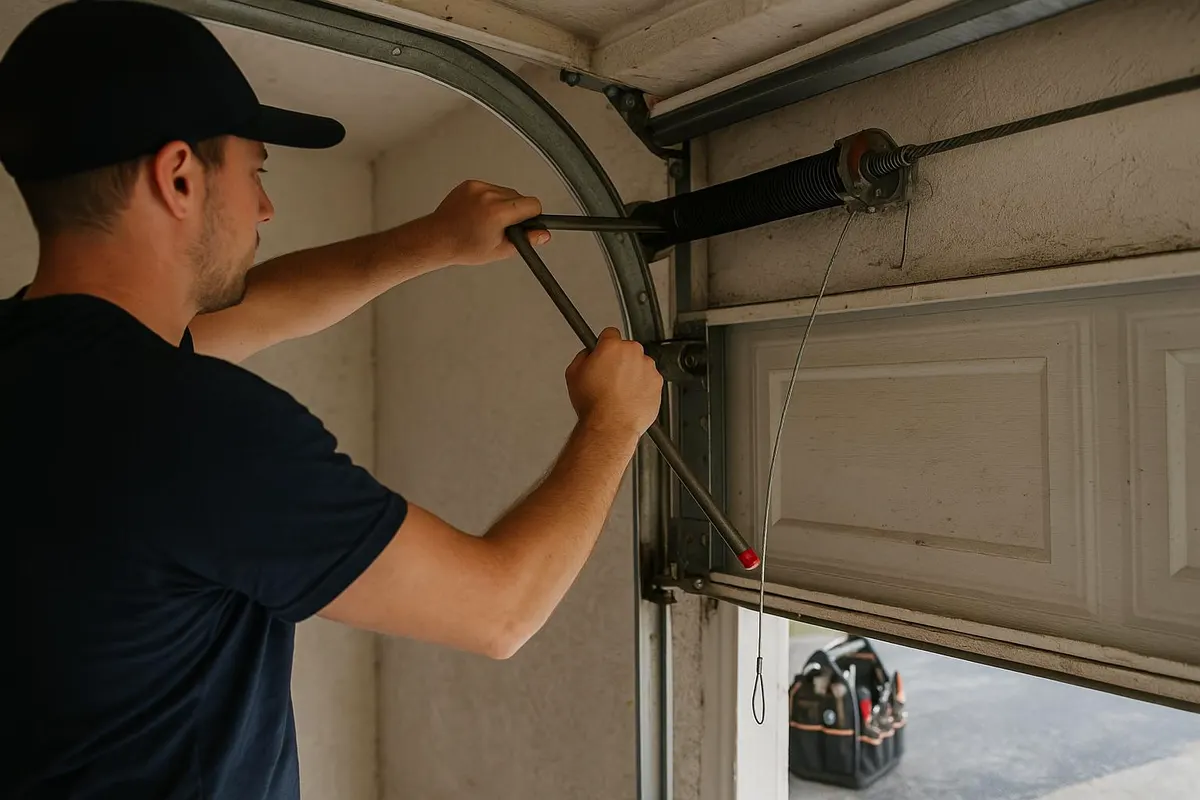
That last category is the one worth taking seriously. A door that looks fine overall but has rust eating into a hinge point or a track bracket can fail suddenly, and torsion springs under tension are not something to inspect up close on your own.
What to Do Before Winter
Fall is actually a good window to deal with this, before any of the occasional winter ice shows up and before next year's storm season starts back up. A few practical steps:
- Hose off the bottom section of the door and the tracks to clear out dust and grit that's been collecting all summer — dust and dirt trap moisture against the surface longer than bare metal or wood would hold it
- Touch up small chips and scratches with a rust-inhibiting primer and matching paint before they turn into bigger bubbles
- Check that your sprinkler heads aren't spraying directly onto the door every time they run, which is a surprisingly common cause of bottom-corner rust
- Lubricate hinges and rollers so grit doesn't sit in the moving parts and hold moisture against the metal
- If you have a wood door, reseal or restain it before the wetter stretch of weather, not during it
When to Call Austin Garage Door Pro
If you're seeing rust near the springs, hinges, or bottom brackets, or a wood panel that's swollen enough to bind when it opens and closes, that's past the point of a DIY touch-up. Our Garage Door Maintenance service includes a hands-on check of hardware, rollers, and the areas most prone to moisture damage, so we catch corrosion while it's still cheap to fix. If a panel is already compromised structurally or the door isn't moving smoothly, our Garage Door Repair team can tell you honestly whether it's a patch job or a panel replacement, no guesswork needed.
If you're in Austin, Cedar Park, Round Rock, Pflugerville, Leander, Lakeway, Bee Cave, or Georgetown and you want a second opinion before this argument becomes a bigger repair bill, give Austin Garage Door Pro a call. We'll take a look, tell you straight whether it's cosmetic or not, and get it handled before the next storm rolls through.